
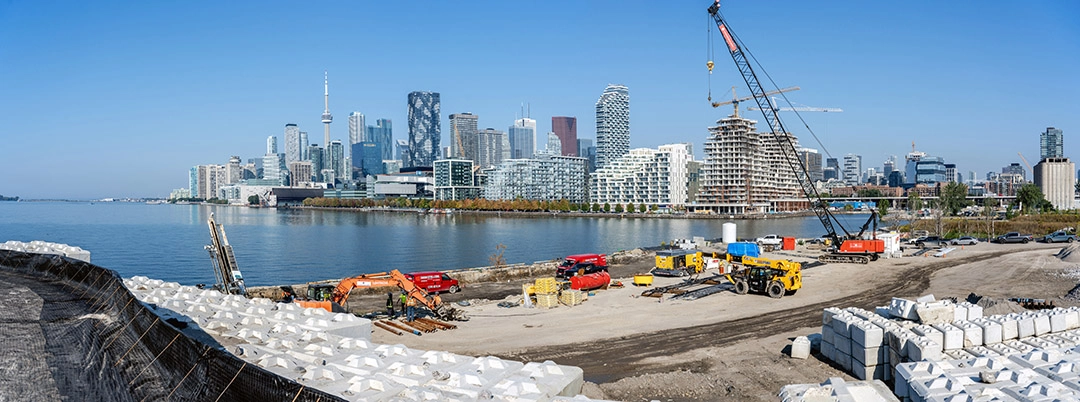
Reimagining Toronto’s eastern waterfront
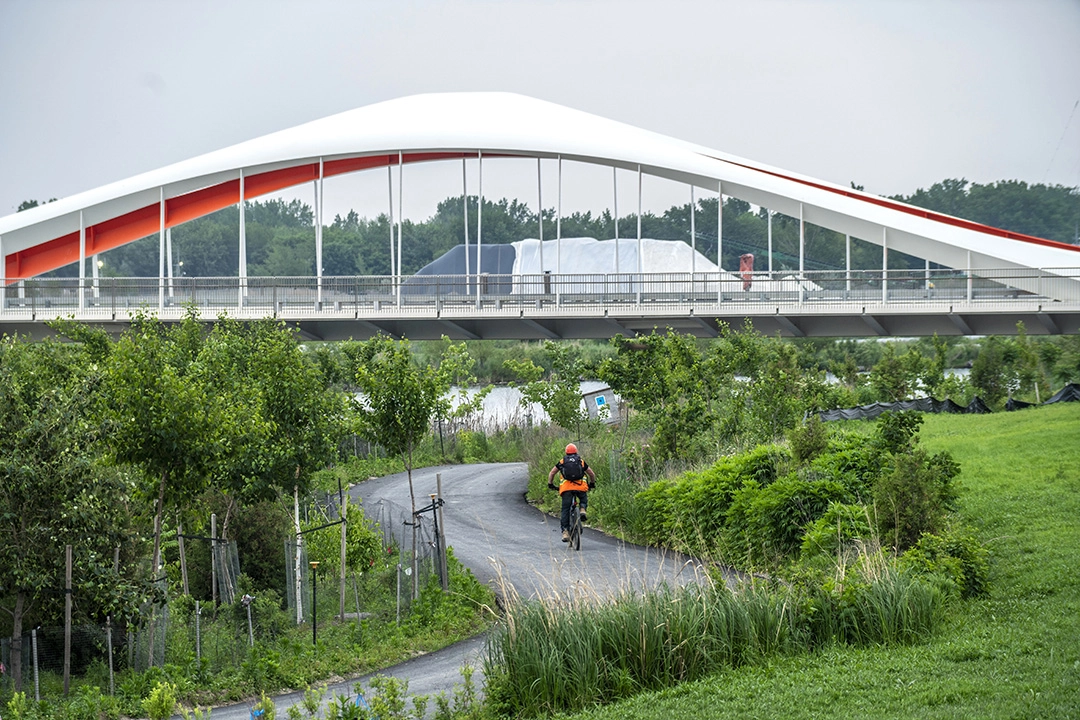
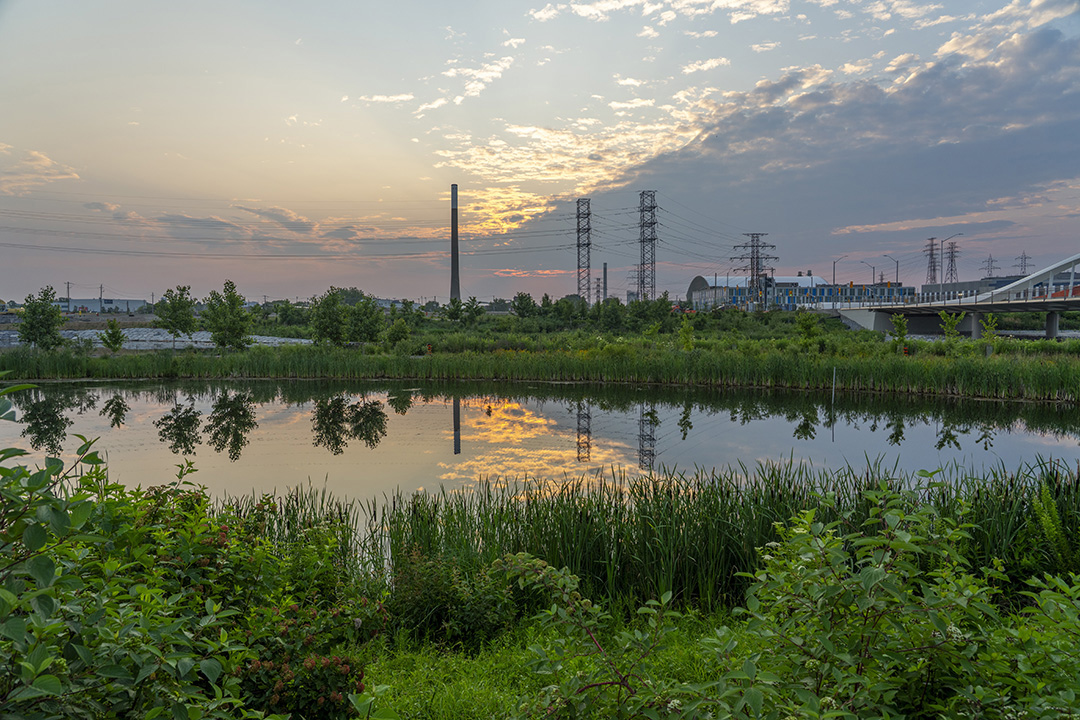
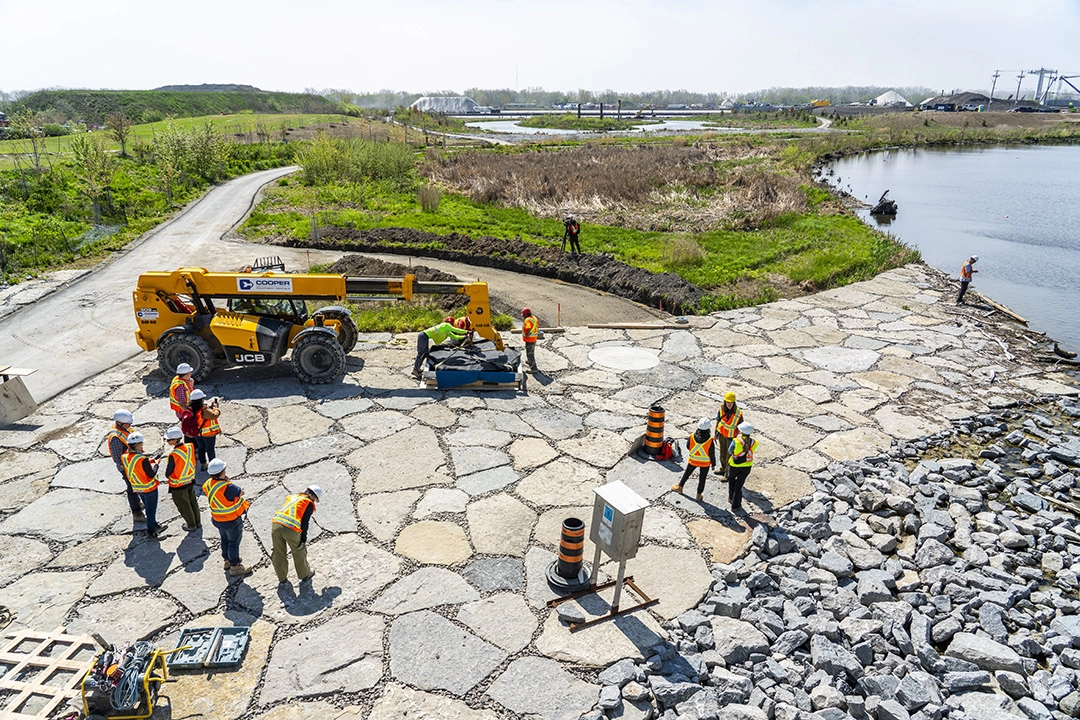
Toronto’s Port Lands, a vast, underused industrial site on the city’s eastern waterfront, faced urgent challenges: vulnerability to flooding, degraded natural habitat and limited public access. Waterfront Toronto set out to change that, launching an ambitious program to restore the land, protect surrounding neighbourhoods from extreme weather, and unlock the site’s potential for new communities, green space and economic growth. This included the creation of Biidaasige Park, a new destination waterfront park, and a new island, Ookwemin Minising.
The scale and complexity of this undertaking – spanning river engineering, environmental remediation, new infrastructure and landmark parks – required experienced program leadership from the outset. Waterfront Toronto selected our team to provide program management support services through a competitive public procurement in 2018.
Quick Facts
The flood protection project safeguarded 290 hectares of waterfront from potential storm events, the size of Hurricane Hazel (1954).
We served as program management support for the $1.35-billion tri-government infrastructure project, overseeing 21 interconnected projects spanning flood protection, remediation, parks, roads, bridges and wetlands.
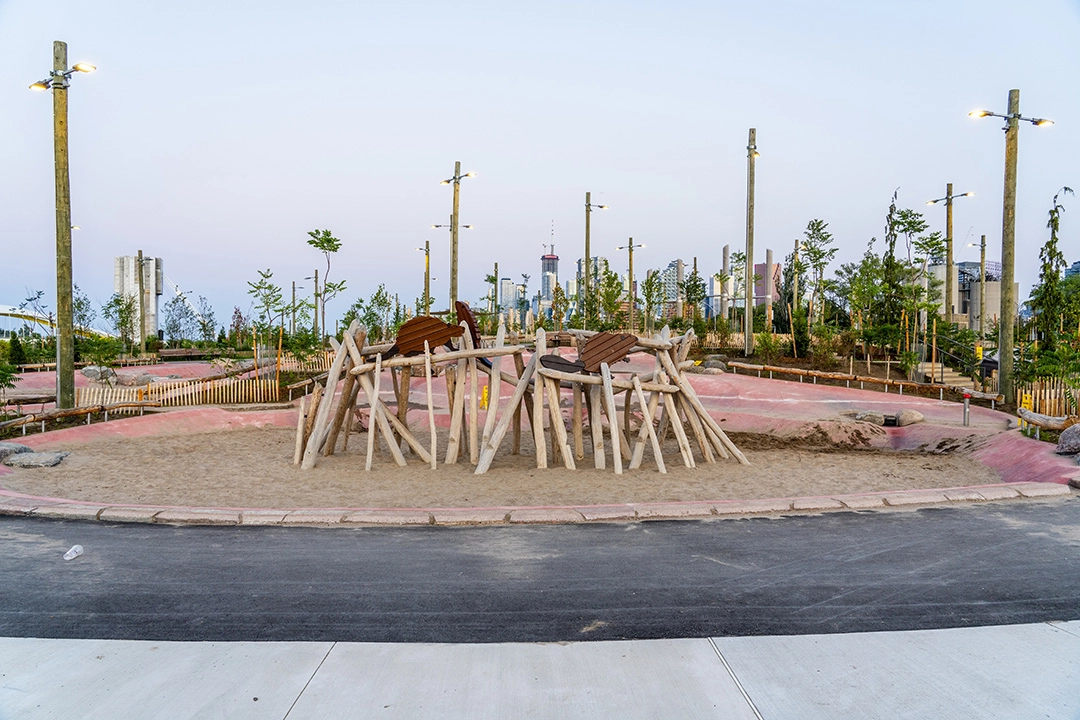
The creation of Biidaasige Park, features 50+ acres of new greenspace, 5,000+ trees, 77,000 shrubs, and two million herbaceous plants.
A scalable approach to program management
We provided Waterfront Toronto with a dedicated core team responsible for overseeing all 21 projects within the program, alongside a flexible roster of on-call advisors with specialized expertise in river design, remediation, construction and risk management.
Our team scaled up and down to meet the program’s evolving needs, bringing in subject matter experts for complex technical issues. Working in close coordination with Waterfront Toronto staff and consultants, we delivered:
-
- End-to-end program and project management, including schedule, budget and risk oversight
- Procurement strategy, contract administration and quality management systems
- Stakeholder communication and engagement, executive dashboards and quarterly reporting
- Support for funding applications, business case development and stage-gate processes
- Quarterly risk workshops, claims advice and cross-project interdependency mapping
Throughout delivery, we embedded sustainability into our program management approach at every stage, from overseeing the naturalization of the river valley to coordinating flood protection infrastructure designed to adapt to a changing climate.
Delivering on sustainability
By maintaining program-wide oversight, our team advanced Waterfront Toronto’s sustainability ambitions across four dimensions:
1. Decarbonization: Biidaasige Park now spans more than 50 acres of restored greenspace, with an additional 10 acres set to open in 2026. The park is home to more than 5,000 trees, 77,000 shrubs and two million herbaceous plants, which contribute to natural carbon sequestration and ecological richness.
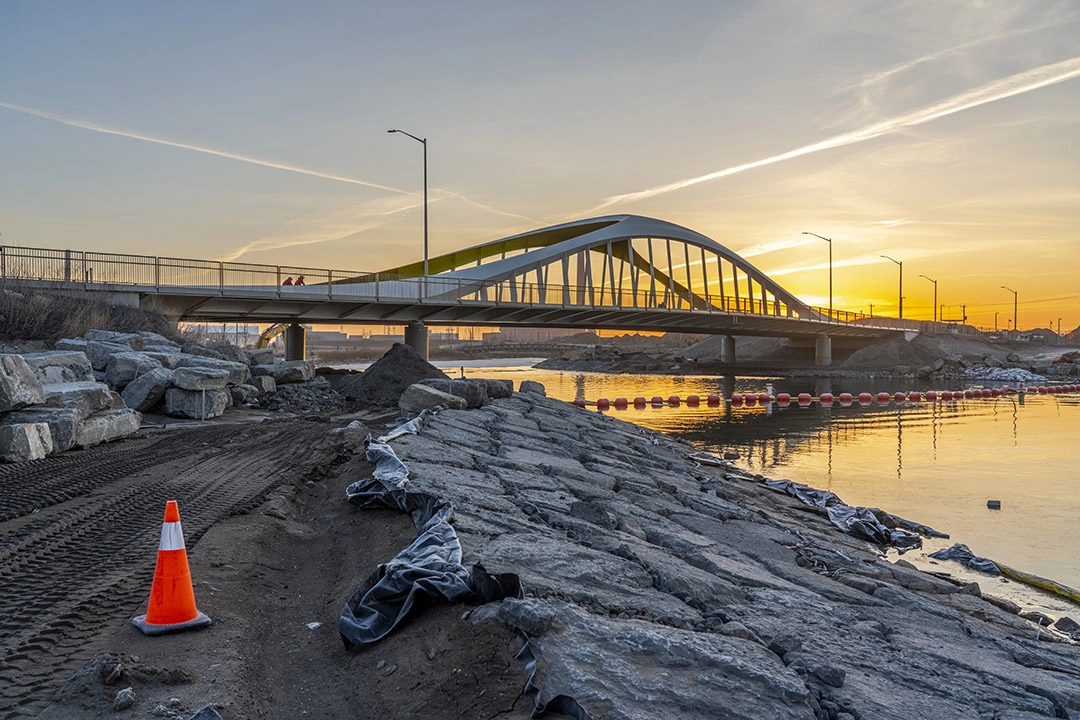
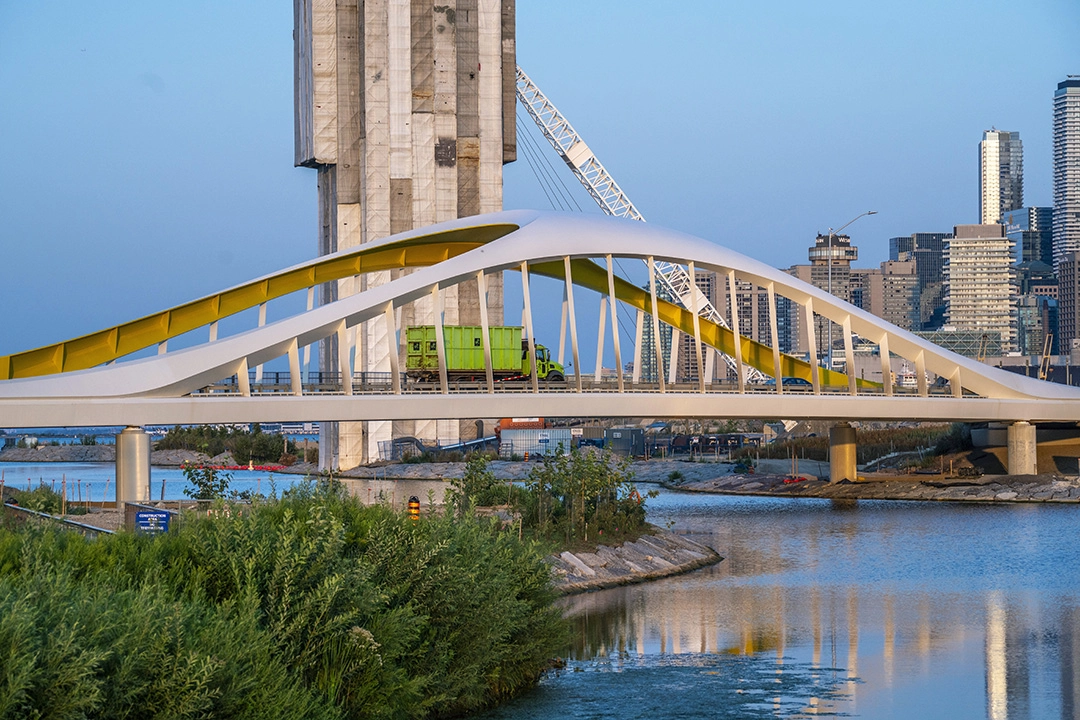
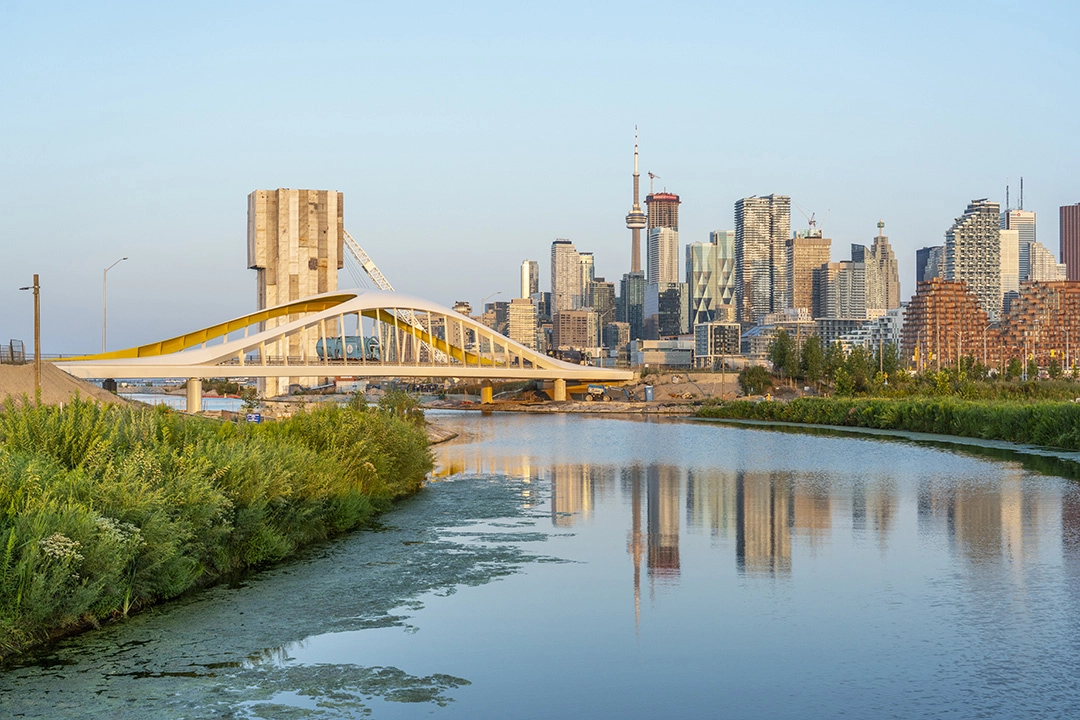
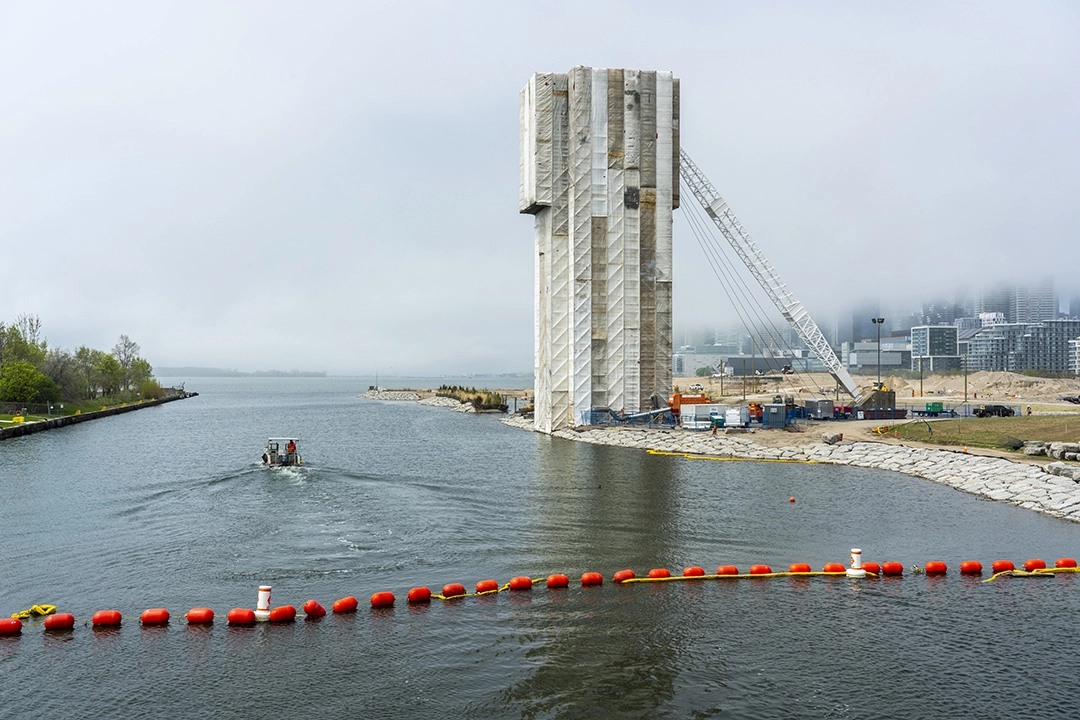
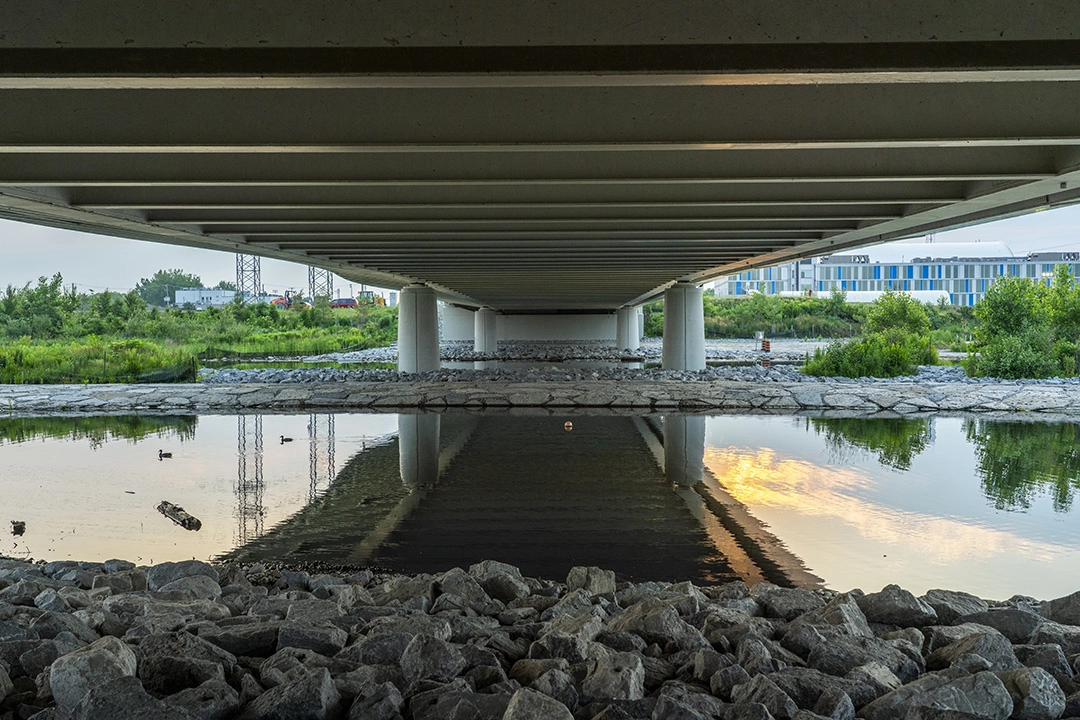
2. Resilience and adaptation: A newly constructed river valley now channels the Don River to meet the lake at a naturalized mouth, enabling the creation of Ookwemin Minising, a new island that incorporates flood protection features built to withstand a storm event. The completion of this work protects 290 hectares of Toronto’s central eastern waterfront and unlocks the island for future rezoning and mixed-use neighbourhood development.
3. Health, safety and wellbeing: Biidaasige Park offers trails, playgrounds, picnic areas, off-leash dog parks, and a pebble landing for non-motorized watercraft. It is a destination that supports active living, community connection and wellbeing. The flood protection infrastructure embedded throughout the program makes the city’s existing assets safer and more durable against extreme weather over the long term.
4. Engagement and belonging: The $1.35-billion program has unlocked transformative potential. At full buildout, Ookwemin Minising is projected to be home to more than 15,000 residents, support nearly 3,000 jobs, and include 15 additional acres of parkland.
With flood protection infrastructure in place and public spaces open to visitors, the Port Lands are now open for the kind of climate-resilient, inclusive urban growth the city needs to support generations to come.
*Photos provided by Waterfront Toronto, Vid Ingelevics and Ryan Walker
*Photos provided by Waterfront Toronto, Vid Ingelevics and Ryan Walker