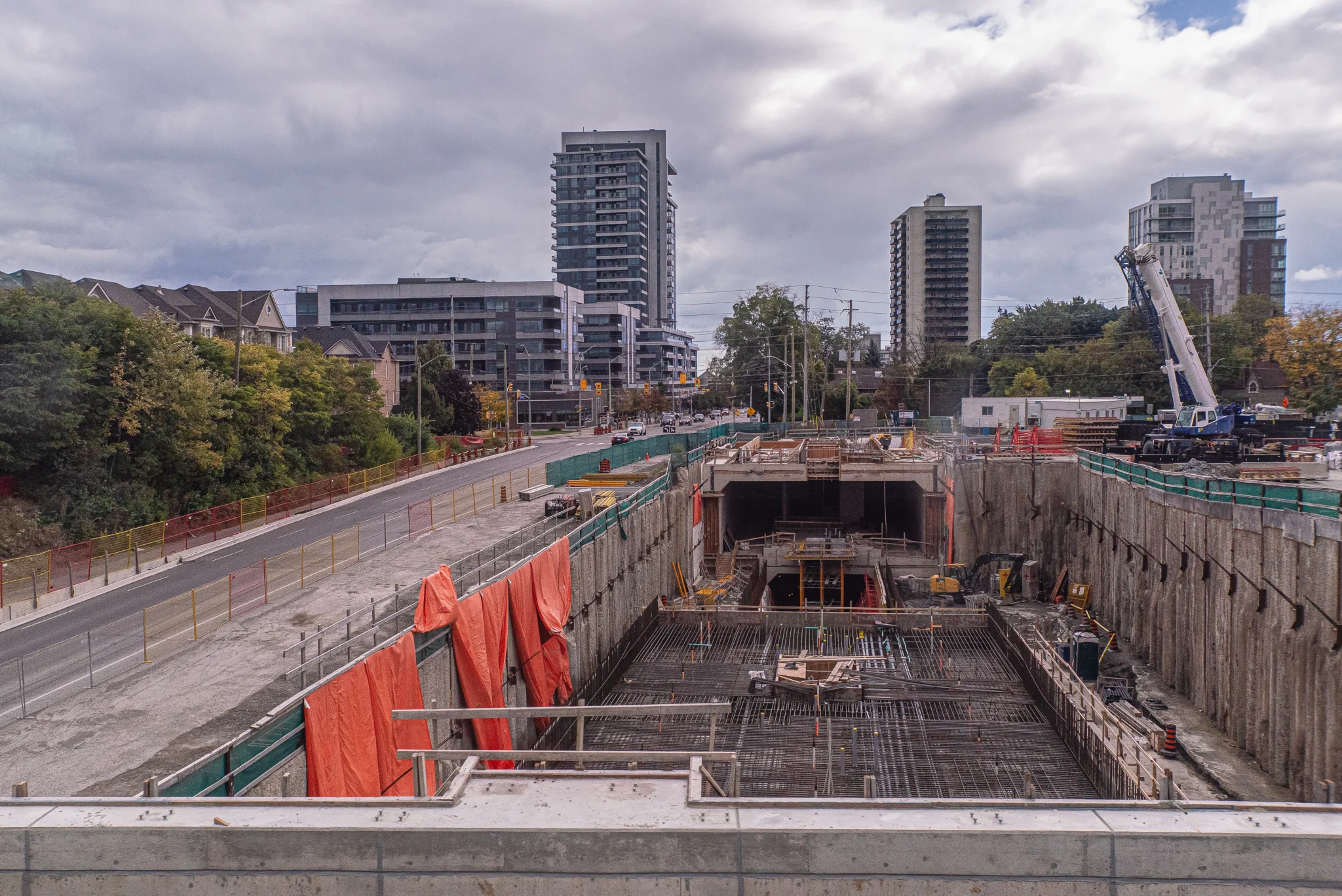
Large-scale transit projects are inherently risky. They involve complex interfaces, dense urban corridors, shifting political priorities, constrained supply chains and multi-year delivery horizons. In this type of environment, you can’t eliminate risk — but you can anticipate, shape and manage it. When risk is managed well, it’s not a defensive exercise, it’s one of the most powerful ways to deliver high-performing transit programs on-time and on-budget.
Despite this knowledge, transit projects across Canada continue to face avoidable cost escalations, schedule delays and productivity challenges. As highlighted in the University of Toronto’s comparative study – Understanding the Drivers of Transit Construction Costs in Canada – and industry experience, many transit agencies lack the capacity to implement robust risk management, tools and strategies that help advance the successful delivery of transformative transit projects.
Don’t miss the first two articles in this series:
Transit Cost Clarity: Canada’s Costly Transit Problem
From Committees to Clarity: How to Govern a $10B Transit Program
Where risk management breaks down
Risk management failures rarely stem from a single decision or isolated oversight. Instead, they emerge through compounding misalignments across planning, governance, procurement and delivery. For Canadian transit agencies, these breakdowns can occur at any stage of a project lifecycle, often surfacing as cost pressures, schedule delays or strained stakeholder relationships.
Five common pitfalls that undermine effective risk management include:
1. Stagnant risk registers
Many agencies track risks, but few treat them as living instruments. Risk reviews are sometimes infrequent, generic or conducted separately from design, procurement and delivery decision-making. As a result, risk profiles evolve faster than the mechanisms used to manage them.
2. Transferred vs managed risk
Cost and schedule issues often arise when program owners attempt to transfer risks — including utilities, permitting, and environmental or geotechnical condition assessments — to contractors before they’re sufficiently understood and quantified. Without a clear understanding of the level of risk, it’s common to see these types of risk transfers resulting in inflated contingencies, adversarial relationships and claims-heavy environments.
3. Misaligned procurement models and risk profiles
Too often, precedent, institutional preference or political appetite drive procurement decisions rather than a rigorous procurement options analysis and corresponding risk allocation framework. Misalignment — such as selecting a fixed-price delivery model when the design is still evolving — can increase cost and reduce market participation as parties attempt to weigh unknown risks.
4. Underestimated third-party interfaces
Utility relocations, municipal infrastructure tie-ins, and coordination with railways or corridor owners routinely cause delays. These risks sit outside the immediate control of the delivery team and require early, structured engagement — something many agencies struggle to maintain.
5. Deferred enabling works
By pushing key de-risking activities (such as utility relocations, long-lead procurement, site investigations, permitting, land acquisition and Indigenous engagement) into the main construction contract, agencies create front-end congestion and uncertainty that contractors must price into bids.
Awareness alone won’t protect a project from risk. True resilience comes from embedding disciplined, forward-looking strategies into every decision, from governance and procurement to delivery. By unpacking where risk management typically breaks down and finding practical, proven solutions, agencies can move from reactive problem-solving to confident, controlled execution that keeps projects on track and all parties aligned.
Why stronger risk management matters
Disciplined risk management doesn’t just improve a project internally; it’s a strategic lever for transit infrastructure efficiency. Transit agencies that invest in robust, integrated risk strategies consistently see clearer pathways to more desirable outcomes. Some of the transformative benefits include:
- More reliable forecasts grounded in genuine exposure rather than optimistic assumptions.
- Greater market confidence, which leads to more competitive bids and reduced contingency padding.
- Smoother construction execution, with fewer redesigns and disruptions triggered by third-party dependencies.
- More collaborative relationships with municipalities, utilities and Indigenous communities.
- Greater resilience, especially in the face of global supply chain volatility and workforce constraints.
Effective risk management isn’t just about avoiding problems, it’s about driving efficiency, predictability and resilience across every stage of a project.
Actionable Steps to Improve Risk Management
Because risk challenges are structural, improving outcomes requires more than incremental fixes or post-hoc mitigation. Meaningful progress comes from focusing on a small number of high-impact interventions that directly influence how risk is identified, allocated and acted upon across planning, procurement and delivery. These actions don’t replace existing systems, they strengthen them by embedding risk considerations directly into the program – from planning to delivery.
1. De-risk early through a disciplined enabling-works program
Transit projects progress meaningfully when project teams complete enabling works such as utility relocations, land acquisitions, permitting, site condition investigations, Indigenous engagement and long-lead procurements before the main contract. This reduces uncertainty, sharpens the scope and shortens the construction curve.
2. Strengthen interface management with dedicated expertise
Utilities, municipalities, corridor owners, and regulators each operate on different cycles and priorities. Structured engagement programs, clear escalation paths and integrated schedules can transform these dependencies from bottlenecks into coordinated pathways.
3. Align delivery models with actual risk profiles
Delivery strategies — whether Progressive Design-Build, Alliance Contracting, or Public-Private Partnership (P3)— must reflect the design maturity, interface complexity and market conditions to align the project with optimal cost, quality and efficiency outcomes.
4. Use the market as a source of intelligence, not just bids
Early and continuous engagement helps owners understand capacity constraints, labour availability, long-lead vulnerabilities, and innovation opportunities. Leveraging this information can help shape packaging strategies and contract structure.
5. Embed risk governance into every major decision
Risk committees, monthly cross-functional reviews and integrated risk-adjusted forecasts can help to inform planning, design and procurement, enabling agencies to make confident, strategic decisions.
When applied together, risk management shifts from a peripheral process to a strategic differentiator. However, embedding this level of discipline consistently across complex, multi-year transit programs often requires additional capacity, specialized expertise and an independent perspective.
Enhancing risk maturity
Even the most capable teams benefit from fresh perspectives and structured support. Consulting partners can help transit agencies strengthen risk maturity, refine decision-making and transform complex challenges into actionable strategies. A few of the ways consultants can supplement internal expertise include:
- Assessing risk comprehensively across technical, commercial, schedule and interface domains.
- Implementing governance frameworks that promote clear decision gates and executive oversight.
- Supporting enabling works to reduce uncertainty and enable early procurement.
- Offering procurement and delivery strategies that align with actual risk profiles.
- Seconding specialists to facilitate and maintain regular tracking, reporting and mitigation throughout delivery.
Risk is an inherent part of large-scale transit projects, but with disciplined strategies and proactive planning, it can be anticipated, shaped and managed effectively. By aligning procurement with project realities, leveraging internal expertise and partnering strategically, transit agencies can turn potential challenges into opportunities for smoother, more predictable delivery. The result: transit systems that are resilient, efficient and ready to meet the evolving needs of Canadian communities. Looking ahead in the Transit Cost Clarity series, we’ll examine how procurement decisions can be a powerful tool for managing risk and unlocking better outcomes across design and delivery – exploring why the way owners contract projects can matter just as much as how they’re executed.